


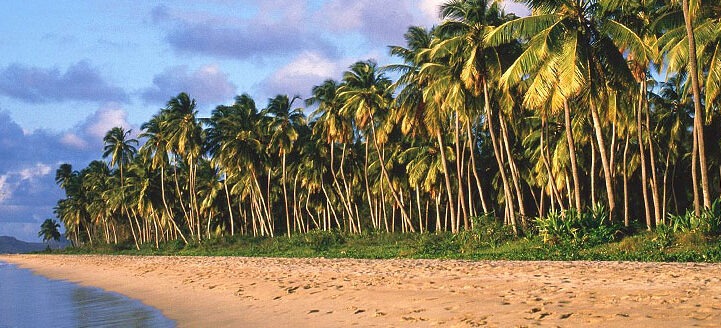
From Shore to Store: When St. Kitts and Nevis Exported Coconuts
In the 1970s, 80s, and 90s, the twin-island federation of St. Kitts and Nevis stood as a proud contributor to the Caribbean’s coconut trade. Long before coconut water became a global health craze, coconuts were an important part of daily life on the islands—fueling both local culture and international markets.
Coconut as a livelihood
For generations, the coconut palm—often called the “tree of life”—was more than a symbol of tropical beauty. In St. Kitts and Nevis, it provided food, oil, craft materials, and income. Families relied on coconuts for household use, while larger farms and estates harvested them for export.
By the 1970s, coconuts joined sugar and cotton as one of the federation’s key agricultural products. The islands exported coconuts in various forms: whole nuts, dried kernels (copra), and coconut oil. Export markets stretched across the wider Caribbean, North America, and Europe, where demand for tropical products was on the rise.
The export boom
The late 1970s and early 1980s marked a period when the coconut industry gained momentum. Farmers harvested coconuts in large quantities, and small factories processed copra into oil for cooking, soap-making, and cosmetics. Ships left Basseterre and Charlestown carrying barrels of coconut oil and sacks of copra, generating valuable foreign exchange.
At its height, the industry employed scores of Kittitians and Nevisians—farmers, factory workers, transporters, and traders. For many, coconuts were not only a business but a way of life.
📊 Coconut Production Trends
-
1970s: Production averaged ~1,650–1,760 tonnes per year, showing small fluctuations but relatively stable output.
-
1980s: Production gradually increased, reaching ~2,000 tonnes by 1984.
📝 Interpretation
-
The 1970s–1980s marked a period of steady but modest production, mostly for local and regional consumption.
-
The boom reflected increased investment in agriculture, diversification efforts after sugar started to decline, and export-oriented strategies.
-
Coconut production was significant enough to place St. Kitts and Nevis within the regional trade flows of the Caribbean, often linked to exports of copra, coconut oil, and dried coconuts.
Challenges of the 1980s and 1990s
Despite its early promise, the industry began to face challenges in the 1980s. Diseases such as lethal yellowing threatened coconut palms across the Caribbean, and St. Kitts and Nevis was not spared. Global competition also grew, as larger producers like the Philippines, Indonesia, and India dominated international coconut markets.
By the 1990s, the situation worsened. Climate-related issues, high production costs, and limited economies of scale made it difficult for the federation to compete. In addition, the gradual decline of plantation-style agriculture and the shift toward tourism as the main economic driver reduced investment in coconut exports.
A lasting legacy
Although large-scale coconut exports faded by the late 1990s, the crop never disappeared. Coconuts remain deeply woven into the culture of St. Kitts and Nevis—from refreshing coconut water sold along the roadside, to coconut milk used in traditional dishes like coconut dumplings and sugar cakes.
In recent years, global demand for natural coconut products—water, oil, flour, and cosmetics—has revived interest in coconut farming across the Caribbean. While St. Kitts and Nevis no longer export coconuts on the scale of the 70s and 80s, the history of that era reflects the resilience and adaptability of small-island economies.
Looking ahead
Today, coconuts are less about barrels and sacks for export, and more about value-added products for tourism and local markets. Yet the memory of those decades when ships carried coconuts from the federation to the wider world remains a proud chapter in St. Kitts and Nevis’ agricultural history.